Showing posts with label Manga. Show all posts

10 February 2026

Lone Wolf and Cub: Omnibus Editions (2013-16)

LW+C: Omnibus Editions (2013-16)
Author: Kazuo Koike | Illustrator: Goseki Kojima | Page Count: LOTS! [1]

"Good fortune and ill, twisted together like a rope..."

22 June 2024

Ghost in the Shell: Stand Alone Complex: Manga (2010-14)

Episode 001: Section 9 (2010)
Author + Illustrator: Yu Kinutani | Page Count: 248

"[W]e've determined the contents of the brain are fake. So where's the real one?"

A number of cyborg Geishas have taken clients hostage, among them a high-ranking government official who at the time of his capture was engaging in some odd activities with the pretend ladies.

The Prime Minister summons the country's best counter-terrorist unit: Public Security Section 9. Led by the cybernetically enhanced Major Kusanagi, the team are called upon to not only resolve the situation, but to find out who's behind it, and why.

It's a manga adaptation of an anime TV series that was inspired by a film adaptation of a manga. If you're familiar with all of those things, then the book might be of interest to you, but know that it's the entire first episode of the GitS SAC anime in manga form - it's almost verbatim, except for some minor changes in the action scenes that don't alter the main storyline one bit. It's arguably less fun than watching the anime, so is probably best recommended for super-fans or folks who prefer manga, only.

24 February 2024

.hack//4Koma (2010)

.hack//4Koma (2010)
Author: Koichi Sumimaru | Illustrator: Various |  Page Count: 192

"Your morals as a protagonist are being challenged, aren't they?"

A yonkoma, often shortened to 4koma, is a four-panel manga similar to the kind of thing you'd see in a Sunday newspaper, except that most yonkoma are read from top to bottom, not left to right horizontal.

The .hack yonkoma parodies Project .hack and .hack Conglomerate. The comedy is derived mostly from non-canon meetings, rivalries, awkward social situations, and typically friendly people being dicks to other characters. As such, in-jokes are definitely the order of the day, so if you're not very familiar with each person's usual demeanour, or the .hack world, in general, you'll miss most of the situational humour.

10 May 2022

The Legend of Zelda Manga: Legendary Ed. Vol. 05 (2017)

Four Swords: Parts 1 and 2 (2004)
Author and Illustrator: Akira Himekawa | Page Count: 370

"There's a new Link in this chain!"

I've not played the Four Swords Adventures (2004) game because the stores near where I lived didn't stock it and I didn't have access to online retailers back then, but after reading the two-part adaptation, I'm wishing that I could play it right now!

After some brief but satisfying establishing of Link's uppity nature and his friendship with Princess Zelda, the Big Bad is unleashed and the adventure begins.

The environments will be familiar to anyone that's played any of the previous games (Town / Mountain / Ice / Desert regions, etc) but that familiarity didn't result in reader apathy because the situations that the Links find themselves in held my attention completely.

The comedy is situational and more often than not caused by some kind of confrontation; it's rarely the goofy kind that I complained about in Oracle of Seasons (2001), so it's much more enjoyable.

10 April 2022

The Legend of Zelda Manga: Legendary Ed. Vol. 04 (2017)

The Minish Cap (2006) / Phantom Hourglass (2009)
Author and Illustrator: Akira Himekawa | Page Count: 374

"The road you travel will be dangerous. Take this."

Series protagonist Link is always recognisable in his green duds and pointy hat, but he's not always the same Link. There are exceptions, of course, such as the one in Ocarina of Time and Majora's Mask, but mostly the character is different in each game. It's not a drastic change; it's more of a variation on a theme.

Akira Himekawa applies the same principle to each of her Links in the mangas. In The Minish Cap's case the artwork is one-hundred percent chibi. It would've made sense to draw certain parts of it that way, but unfortunately it's used from beginning to end.

I'm not a fan of the exaggerated art style, but judging by the level of excellence shown in the previous books I'm guessing that it's at least good chibi?

10 March 2022

The Legend of Zelda Manga: Legendary Ed. Vol. 03 (2017)

Majora's Mask (2001) / A Link to the Past (2005)
Author and Illustrator: Akira Himekawa | Page Count: 402

"As long as I see that in the sky, I can't rest."

Majora's Mask continues the story told in Ocarina of Time (2000). Link enters a mysterious forest searching for his missing fairy, Navi, but trouble ensues and the 'Hero of Time' ends up in a situation wherein he has just three days to stop a major disaster or everyone caught in the impact will die.

The way the Nintendo 64 game is structured doesn't make any kind of linear adaptation easy, so Akira Himekawa took the only sensible route open, which was to focus on the acquisition of those masks that directly alter Link and ignore all but the most pertinent side-quest, i.e. the one that offers the most opportunity to pluck at the heartstrings. If you've played MM, you can likely guess which one that is.

Consequently, a lot more changes have been made to the story than was made to Ocarina of Time, but in most cases they were arguably unavoidable and, as before, they're very respectful.

10 February 2022

The Legend of Zelda Manga: Legendary Ed. Vol. 02 (2017)

Oracle of Seasons / Oracle of Ages (2001)
Author and Illustrator: Akira Himekawa | Page Count: 386

"Use your left hand! Your left!"

The two 'Oracle' Game Boy Colour games that were released simultaneously in 2001 got their own individual manga adaptation. The games were connected but also cleverly designed to be enjoyed independently in whichever order the player chose.

You could say the same of the two books — originally published separately — but it makes slightly more sense to read Seasons before reading Ages. Whether by coincidence or design, the featured Legendary Edition also presents the two books that way.*

Oracle of Seasons begins in Hylia. Link balks at the suggestion that he should practice his sword skills more fervently. He doesn't yet understand why Hyrule needs knights who are willing to lay their life on the line to protect its citizens, but the power of the Triforce will soon change all that…

10 January 2022

The Legend of Zelda Manga: Legendary Ed. Vol. 01 (2016)

Ocarina of Time: Parts 1 and 2 (2000)
Author and Illustrator: Akira Himekawa | Page Count: 378

"You're certainly popular with the ladies."

The first TLoZ manga from Akira Himekawa* was a two-part work based on the excellent Nintendo 64 game of the same name. The Legendary Edition reprint collects both manga into one larger format HB book, with better paper and some additional colouring.

It essentially tells the same story as the game but there are some differences in how characters are introduced, none of which I found to be in any way disrespectful to its source. In fact, I feel the opposite was true - the narrative makes new connections between existing characters, enabling some very successful emotional moments to surface as a result.

The drama is never underplayed but nor does it take itself too seriously; it has an occasional playful laugh at its own expense (e.g. see the quote above).

The artwork is excellent; even the rough sketches that are included are fantastic! Child Link world has a different feel than Adult Link world and the danger level in each reflects that.

22 September 2018

Voices of a Distant Star (2018)

Voices of a Distant Star (2018)
Author: Makoto Shinkai | Adaptation + Illustration: Mizu Sahara | English Translation: Melissa Tanaka | Page Count: 230

'Bit by bit I'm losing sight of the edges of the world... Sometimes, I forget where I am.'

A belated English language version of the manga adaptation of Makoto Shinkai's breakthrough anime, first published in Japan in 2005. This version of the story is slightly different to the original short film.

The story is simple but deeply affecting. Mikako Nagamine and Noboru Terao are classmates who are in love but half-afraid to admit it to themselves or each other. When interstellar war separates them, their only means of communication is via long-distance text message on a mobile phone network.

But the further away the war takes Mikako, the longer it takes for her messages to reach Noboru.

If the anime was recreated as is, the manga would probably be quite a thin volume, so, in order to ensure that isn't the case, new content has been added, including a small number of subplots.

18 August 2018

She and Her Cat (2017)

She and Her Cat (2017)
Author: Makoto Shinkai | Illustrator: Tsubasa Yamaguchi | English Translation: Kumar Sivasubramanian | Page Count: 180

'She always waits for the phone to stop ringing, then checks to see who called.'

It's possible that I've used the word 'wistful' in the past in a less than complimentary way, but in this instance it's very much in the form of praise. Shinkai's ability to express in an understated but powerful way the regretful longing that the word implies is heartbreakingly sincere and rarely ever saccharine.

The blurb on the back cover does a good job of explaining what the book is about without spoiling anything, which is a rare achievement. The story isn't particularly deep, but it will have a poignant resonance for some folks. It's adapted from Shinkai's own short OVA of the same name, which came out in 1999. I posted a very brief review of it HERE.

9 January 2018

.hack//Legend of the Twilight: Manga Trilogy (2003)

.hack//Legend of the Twilight: Volume 01 (2003)
Author: Tatsuya Hamazaki | Illustrator: Rei Izumi | Page Count: 176

"I'd watch my back if I were you.
Your friend has returned."

A manga trilogy that forms a part of the Project .hack series, the first generation of the .hack universe. It's set chronologically after the first four games that appeared on the Playstation 2 console; i.e. Infection; Mutation; Outbreak; and Quarantine. (See HERE.)

If you're new to The World you'll lack the necessary background and will encounter minor spoilers of events that unfolded in the games. It's not necessary to have played them first, but it's recommended. The book makes some allowances for new fans, but space is limited, so the catch-up is necessarily brief.

If you've a working knowledge of what has gone before, then dive in. Otherwise, you might want to play the games first, if that's an option for you.

30 December 2017

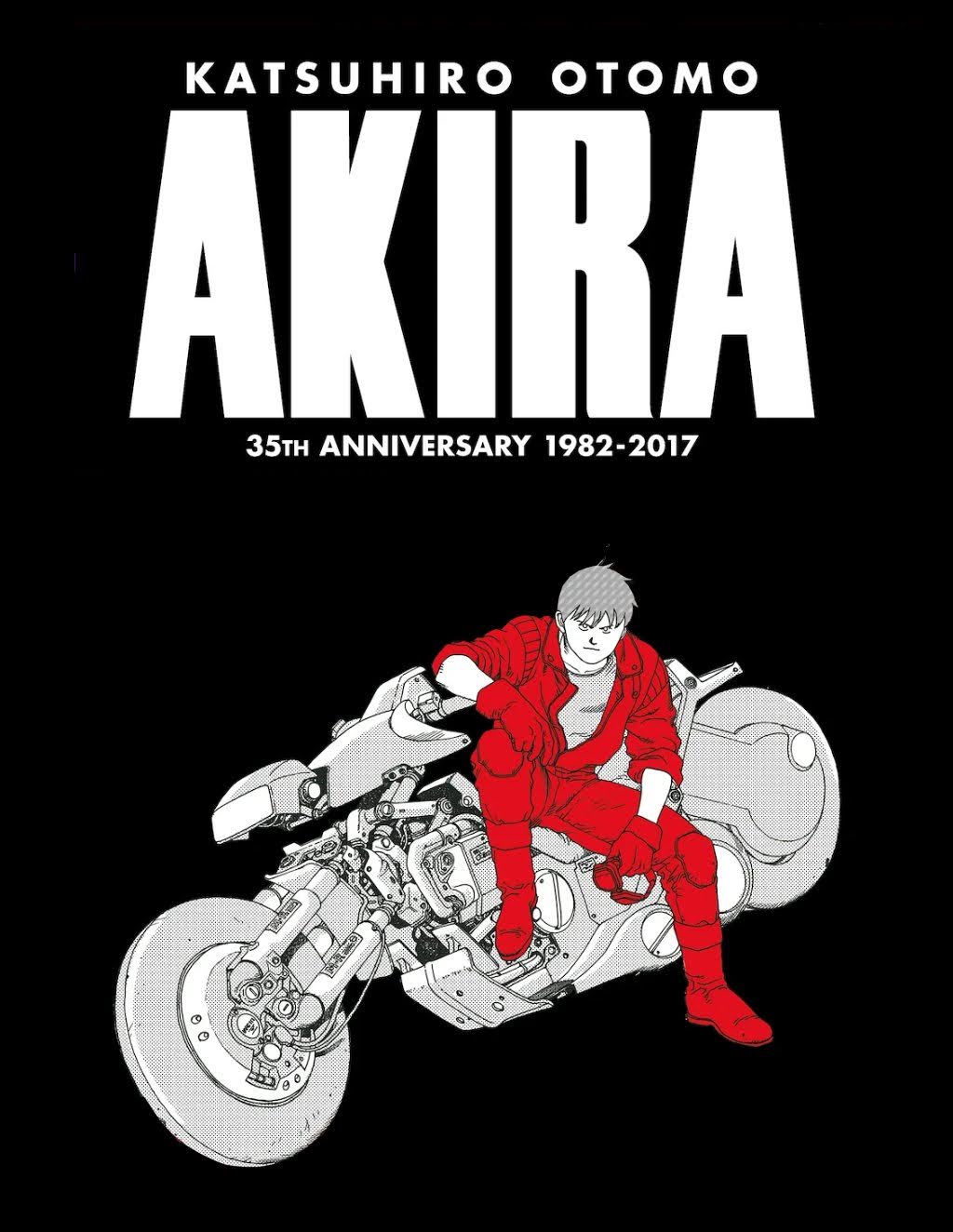
Akira: 35th Anniversary Box Set (2017)

Akira: 35th Anniversary Box Set (2017)
Author + Illustrator: Katsuhiro Otomo  |  Publisher: Kodansha | Page Count: 2530

I knew in advance that Katsuhiro Otomo's seminal six-volume AKIRA manga was 2000+ pages, in total, but I wasn't expecting Kodansha's 35th Anniversary box set to be as mammoth as it is. It's the size of a hat box and heavier than a baby!

The scale of the work deserves a review that's a lot more in depth than I've time to give — the phenomenal world-building alone is worthy of a mini dissertation — so I'll limit my words to the presentation of the physical product, pictures of which are at the end of the post. (The image to the right is edited to fit my posting template.)

I suppose that means it's partially a review of the packaging, but that's not my goal. Given the costly RRP, it's about whether I feel it's worth it or not, but opinions on value will, of course, differ.

22 September 2017

Real Lies (2006)

Real Lies (2006)
Author + Illustrator: Lee SiYoung  |  Page Count: 230

"I want to share a drink with her at a street bar and talk about life..."

Stylised as ReaLies on the cover but referred to as Real Lies inside, it's a Korean manhua with three short tales about human interaction. It's labelled as Volume 1, but to date there hasn't been a Volume 2, at least not one translated into English.

The first story is the longest of the three, How Martians Conquer the Earth. The title makes it sound straightforward enough, but it's not like that at all. It's really quite unusual and I admit that I didn't grasp all of it until afterwards, when I read the short author's note at the end of the book that clarifies a little of what the aim of the work was.

It's partly because I wasn't yet attuned to Lee SiYoung's methods and partly because those same methods are structurally messy. It's something that's perhaps exacerbated by the translation, but the confusion itself is very much there, in the presentation, in words spoken and even in timing.

21 April 2017

Dissolving Classroom (2017)

Dissolving Classroom (2017)
Author + Illustrator: Junji Ito  |  Page Count: 202

"She's a monster!! Her favourite thing to do is frighten people on street corners!"

Five of the seven shorts herein are connected, known collectively as Ito's youkai (dissolving) series, together telling the tale of male high school student Yuma Azeri and his younger sister, Chizumi.

The book has a few of the uncomfortably horrifying moments that the author is known for, but mostly it takes a more gross-out approach, something that's altogether less interesting to me. Frankly, if I'd had the opportunity to read it before buying it then I'd have saved my money for something better.

It's not terrible, but nor is it anything special. The pacing is decent, and the artwork is of the usual high standard, but it wasn't until the fourth story that I felt any kind of chill take a hold of me. Prior to that I was repulsed by the ickiness, but I can get a similar kind of feeling just watching someone eat mac and cheese and it won't cost me a penny (unless I'm forced to pay for the offending foodstuff).

4 April 2017

Ghost in the Shell: Manga Vol 1 + 1.5 + 2 (1991-01)

Ghost in the Shell: Vol 1 (1991)
Author + Illustrator: Masamune Shirow | Page Count: 368

"…[T]here was an 'SOS' literally written in blood on the cyberbrain unit…"

The serialised manga that started the Ghost in the Shell phenomenon is both a product of its time (weird noses and comedy/chibi style reactions) and light-years ahead conceptually and philosophically of where most western comic writers were at the time.

Shirow locates the work in a similar futuristic world to what he'd created for his previous works as a foundation, such as Appleseed (1985) and Dominion (1986), but by introducing GitS-specific concepts he effectively crafts something totally unique.

The blurb on the back makes it sound like what you're getting is the same story that was featured in Mamoru Oshii's much-loved 1995 anime adaptation. That's not strictly true. You do get that story, but it's only a small part of the entire book and it doesn't appear until late in the day. If all you wanted was the movie in manga form, then you'll perhaps be slightly disappointed. Admittedly, Oshii took the best of what the collection has to offer, but on the plus side you get a lot more content herein than was featured in the film, so it's actually better this way.

25 March 2017

Junji Ito's Cat Diary: Yon and Mu (2015)

Junji Ito's Cat Diary: Yon and Mu (2015)
Author + Illustrator: Junji Ito  | Page Count: 116

"Hrm. The road to cat wand mastery is long and treacherous indeed!"

An illustrated account of the trials that manga author Junji Ito faced after moving into a new home with his fiancée and her two cats, Yon and Mu. Ito had never before shared a home with cats, and the cats had never before shared theirs with an Ito. Adjustments on both sides would be needed if a happy balance was to be achieved, but anyone who's ever lived with a cat (or cats) will know that they're rarely in a mood to compromise, especially when it involves a stranger.

The natural passing of time is the structure, so don't expect a tightly plotted narrative. And, while it's not a prerequisite, a love of felines is most likely going to help you get the most from the book. The little things, the nuances, the 'I'm judging you!' glances, and the silent 'I'll fucking kill you if you attempt to pet me now!' threats will be more relatable to that audience.

21 January 2017

Nekogahara: Stray Cat Samurai: Vol 01 (2016)

Nekogahara: Stray Cat Samurai: Vol 01 (2016)
Author + Illustrator: Hiroyuki Takei  |  Page Count: 180

"A cat carves his own path..."

Norachiyo, a one-eyed cat with a mean disposition, travels across Japan in search of something personal.

A bell fashioned around a cat's neck signifies that it has a master, that it's a "kept cat" and should be afforded all the privileges that such status brings. Norachiyo's bell is attached to his deadly katana, an indicator that he's a rōnin, a masterless samurai.

It's clearly influenced by Kazuo Koike, both in style and in how the societal aspect of the era plays a key role in the story's standing. If Ogami Ittō was to get his son a cat for company, it'd be Norachiyo.

The action is furious, bloody and violent, although it's sometimes difficult to make out what exactly is going on - but if you've ever witnessed an actual cat fight, then you'll see the parallels make a kind of sense.

15 May 2016

Fragments of Horror (2015)

Fragments of Horror (2015)
Author and Illustrator: Junji Ito  |  Page Count: 224

"I'm looking for a special someone to dissect me!"

After an eight year absence from the horror manga genre that his name has become synonymous with, Japanese author and illustrator Junji Ito returned with a collection of eight short tales of bizarre terrors.

Ito notes in his afterword that the time spent away from writing horror may have resulted in his becoming a little rusty, and sure enough the first story he penned is a little weak, but there's enough of the creeping wiggins in some of the subsequent stories to keep fans of his warped worlds happy.

Themes he's explored before resurface, such as a typically safe environment becoming something menacing and the strain of personal relationships being a precursor to even greater terrors, but there's enough new stuff to balance it out.

9 February 2016

Gyo: 2-in-1 Edition (2015)

Gyo: 2-in-1 Edition (2015)
Author and Illustrator: Junji Ito | Page Count: 400

"What the hell is this?"

Tadashi loves his girlfriend Kaori, though the reader may find it difficult to feel similarly because her inner-bitch rises to the surface often. One of her defining features is that she has an acute sense of smell. When the ‘death stench’ first hits Okinawa it’s Kaori that's most affected. What’s causing the stench makes its presence known shortly afterwards, and that’s when things go full Junji Ito. You'll be thanking the olfactory gods that the book isn't a scratch 'n' sniff.

The creatures that live in the sea have evolved in weird ways. Their peculiarities make sense when viewed in their own environment, but on land they're so alien looking that they can be terrifying. Even the ones we're familiar with, such as sharks, would take on a whole new level of terror when making a beeline for some poor sap on an ordinary street full of cars.

9 January 2016

Uzumaki: 3-in-1 Deluxe Edition (2013)

Uzumaki: 3-in-1 Deluxe Edition (2013)
Author and Illustrator: Junji Ito | Page Count: 648

"Spirals…this town is contaminated with spirals."

Some fears are universal, such as the eeriness of an empty corridor or short-cutting through a shadowy graveyard at midnight, and some are more specific, such as islanders and their complicated relationship with the sea; Junji Ito has the uncanny ability to tap into both kinds and use them to full effect.

Uzumaki (Spiral) is the story of a small coastal town, Kurôzu-cho, and a girl named Kirie Goshima. The town has a strange influence upon its inhabitants that most are oblivious to, but as the peculiarities escalate Kirie begins to take notice of how horrific everything is and how difficult it is to escape.

Making the source of the horror a shape, the titular uzumaki, as opposed to an entity that can be hunted and killed creates a fine line between bizarre and ridiculous, but Ito seems to be fully aware of that; he takes that invisible line and warps even it into a spiral. The result is that the weirdness creeps from deeply unsettling to just plain silly and back again, sometimes from one panel to the next, but approach it with an open mind and you’ll be drawn invariably and uncomfortably inward.